
All posts by nastadmin

PHILIPPINE STANDARD TIME

DOST Officials Sharpen Foresight Skills for Policymaking

Post Views  

MUNTINLUPA CITY – The Department of Science and Technology (DOST) and the National Academy of Science and Technology, Philippines (NAST PHL) are moving to “future-proof”  the country’s scientific landscape by embedding long-term foresight into national policy-making. 

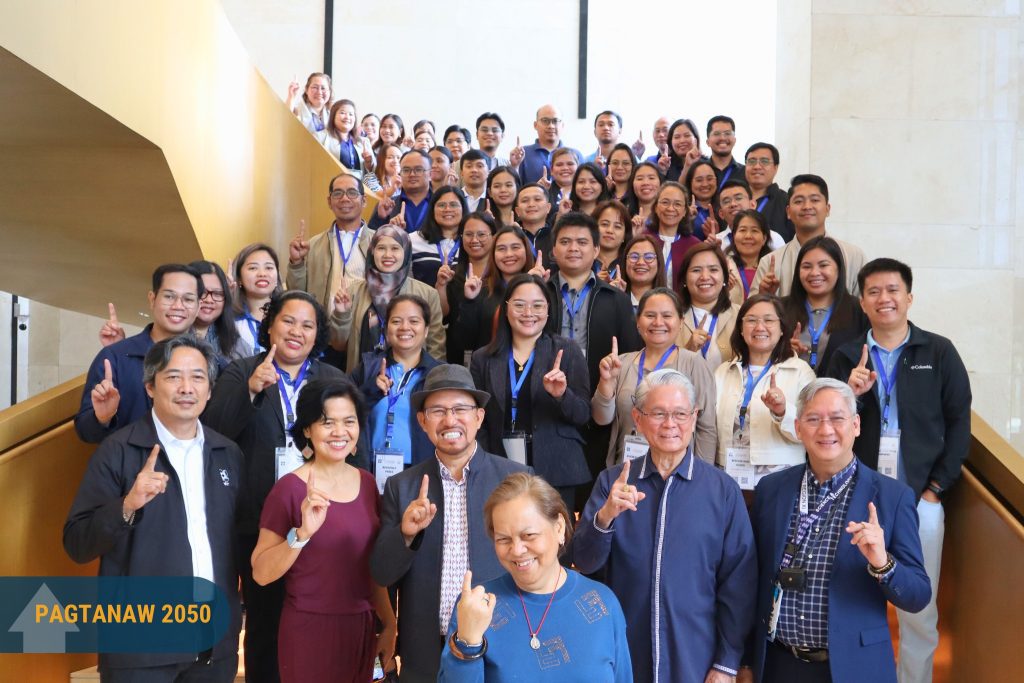
During the In-House Workshop on Policy Research, Analysis, and Formulation for PAGTANAW 2050 held on 20 February 2026 at Acacia Hotel Manila in Muntinlupa City,  Department Legislative Liaison Office (DLLO) Director Lita S. Suerte Felipe, Philippine Science High School (PSHS) Executive Director Dr. Ronnalee N. Orteza, National Research Council of the Philippines (NRCP) Executive Director Dr. Bernardo N. Sepeda, Technology Application and Promotion Institute (TAPI) OIC Director Atty. Israel Jacob R. Zaragoza, and various DOST attached agencies’ planning officers and decision-makers gathered to bridge the gap between visionary goals and actionable government programs. Facilitated by Dr. Jaine C. Reyes of the UP Los Baños College of Public Affairs and Development (CPAf), the workshop focused on turning the PAGTANAW 2050 foresight agenda into actionable policies and programs that can be felt across the department.
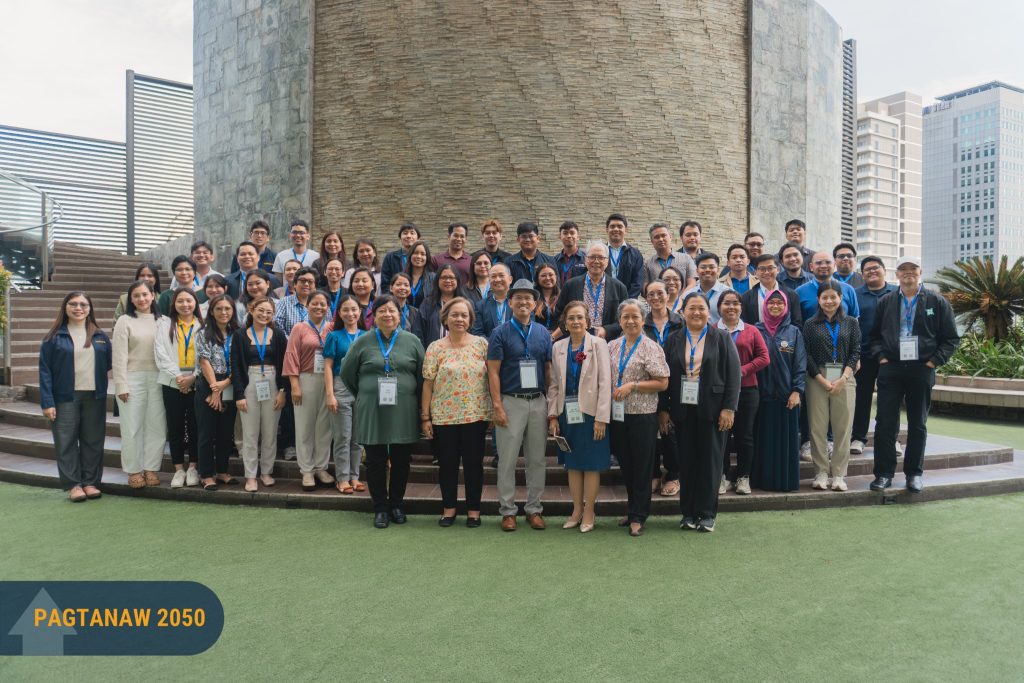
To aid participants in the workshop, Academician Glenn B. Gregorio, project leader of the PAGTANAW 2050 Program’s “Development of the PAGTANAW 2050, the Philippine ST&I Foresight Indicators,” presented key lessons from a benchmarking activity conducted with Australian-based organizations that incorporate foresight practices into their decision-making processes.

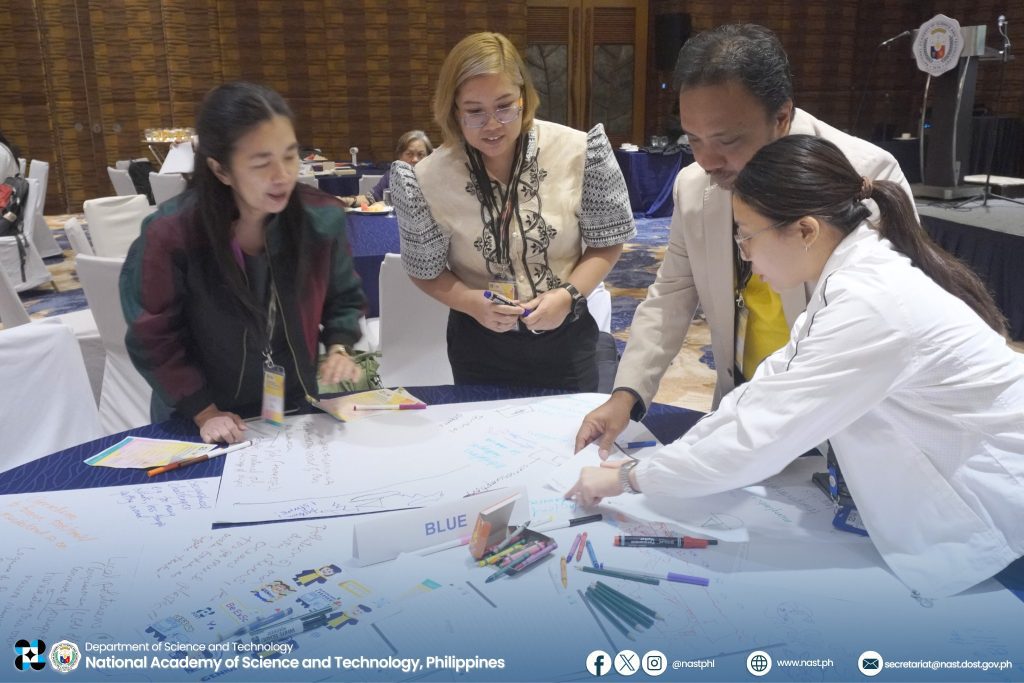
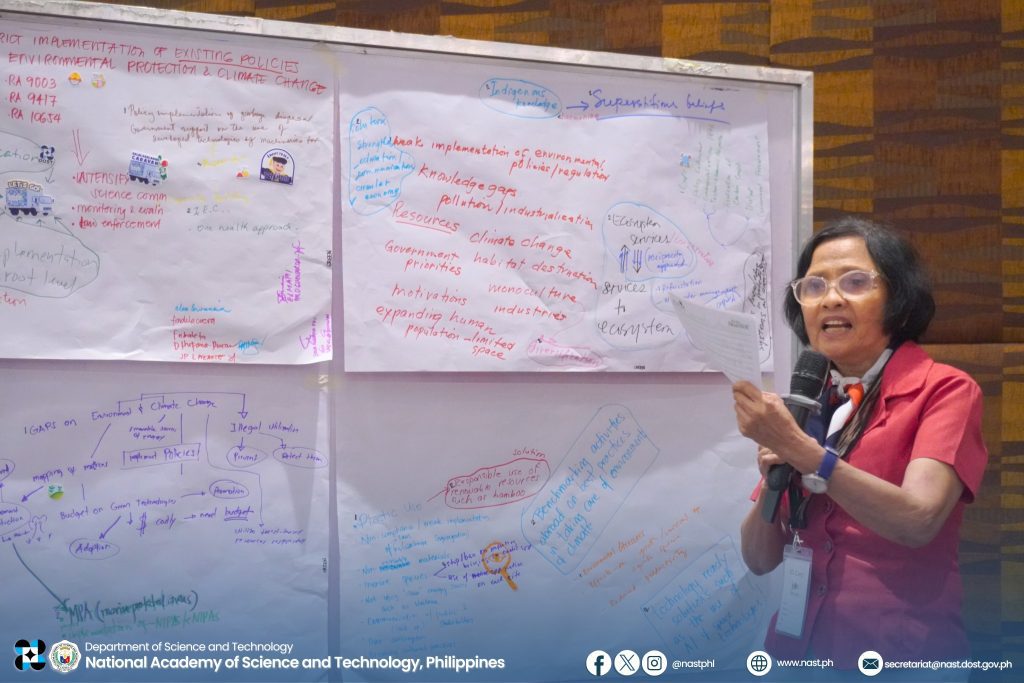
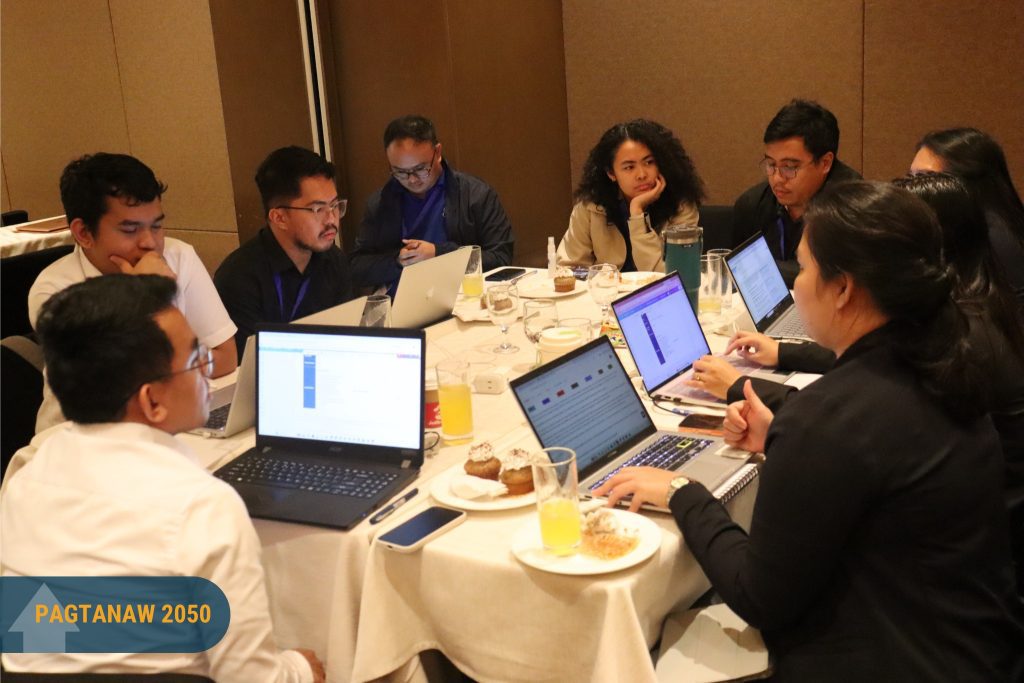
Participants developed policy proposals with the aid of foresight tools to address agency-based issues, such as strengthening technology transfer, institutionalizing science offices in local government units (LGUs), and aligning educational programs with industry needs. Dr. Reyes commended the outputs, stressing the need for foresight to inform concrete policy development through robust stakeholder engagement and evidence-based planning.

The event concluded by reinforcing the importance of embedding foresight into the DOST system’s culture. As a call to action, DOST officials are urged to foster inter-agency collaboration in all policy and planning exercises across agencies, apply insights from international foresight institutes and embed futures thinking and strategic foresight tools into the institutional planning processes of each agency, and formulate and advance policies, programs, and strategies informed by strategic foresight and aligned with long-term national goals.

This workshop represents a crucial step in building the necessary capacity within the DOST to steer the nation’s scientific and technological future and successfully realize the aspirations of PAGTANAW 2050. — Anna Tasnim Basman/NAST PHL

PAGTANAW 2050 is the first DOST-funded inter-disciplinal and trans-disciplinal project on Philippine-focused ST&I Foresight and Strategic Plan that would impact the aspirations of the Filipino people on or before 2050: A Prosperous, Archipelagic, and Maritime Nation.

For more information about PAGTANAW 2050, you may visit the NAST PHL website at https://nast.dost.gov.ph/index.php/pagtanaw-2050 and social media accounts through Facebook, Instagram, X, and LinkedIn: @pagtanaw2050
PHILIPPINE STANDARD TIME

Going Beyond Equations: Scienteach Dagupan Highlights how Science can take Students to Places

Post Views  

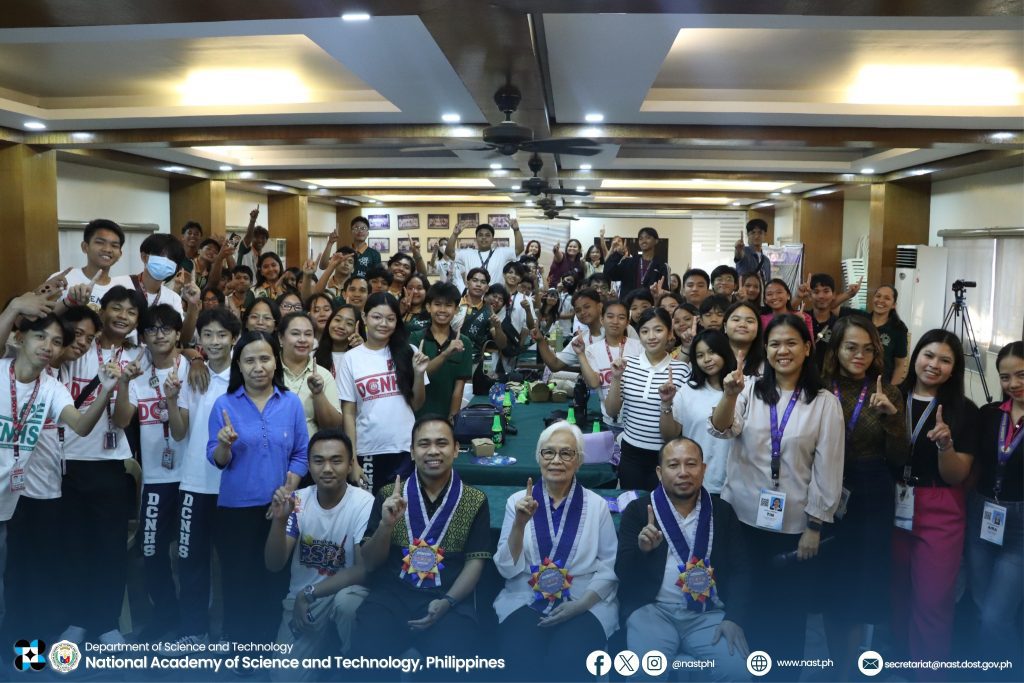
(NAST PHL), in partnership with the Department of Science and Technology (DOST) Ilocos Region, successfully kicked off the 2026 series of ScienTeach: Symposium for the Youth on February 17, 2026, as part of the Regional Science, Technology, and Innovation Week (RSTW) Celebration in Dagupan City, Pangasinan.

ScienTeach: Symposium for the Youth is a series of episodes that showcases various topics featuring National Scientists, NAST PHL Members, and NAST PHL awardees who are accomplished in their fields of expertise. This activity is intended for junior and senior high school students and aims to promote science and technology, bring our scientists closer to the youth, and inspire and encourage students to pursue careers in science.

A total of 73 participants (36 male and 37 female) attended the event. The symposium began with welcome remarks from Academician Jaime C. Montoya, President of NAST PHL, followed by a discussion of the region’s plans and programs by Mr. Geraldo Q. Gabriel, Supervising Senior Science Research Specialist of DOST – Ilocos Norte. Ms. Kristin R. Castillo, Project Technical Assistant IV at DOST – La Union, served as the event moderator.

The program continued with presentations from three (3) esteemed resource speakers who shared their knowledge and experience in their respective fields of expertise.

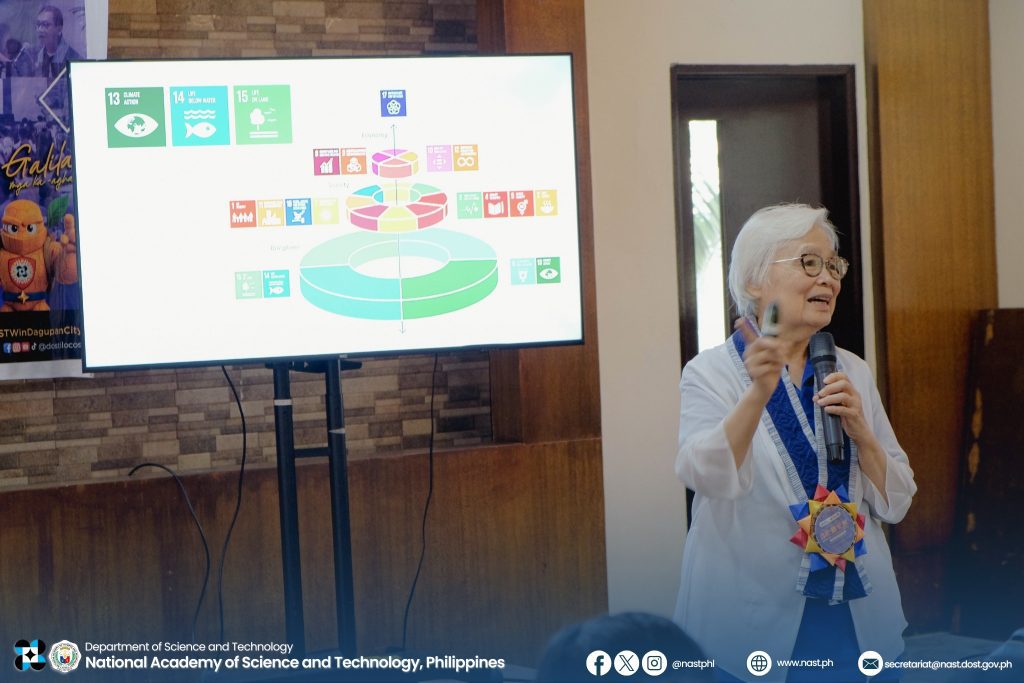
The first speaker was National Scientist Lourdes J. Cruz, a leading biochemist. She discussed that her progress and success stem from thinking outside the box, by not only focusing on the biochemistry of the venom of Conus marine snails but also on how this deadly venom can be turned into a healing agent. She also explained the importance of preserving life below water and on land as a foundation for the United Nations Sustainable Development Goals (UN SDGs) to develop a well-functioning society and economy. NS Cruz emphasized that technical skills, alongside enhanced resourcefulness, creativity, ethical values, and collaboration, will make students successful scientists in the future and take them around the world.

The second speaker, Academician Roel R. Suralta, Career Scientist IV, shared his journey from a student in Cebu to an agricultural scientist. He talked about how he pursued his specialization in root science to improve climate-resilient crops through a multidisciplinary approach. He encouraged the students to pursue careers in science to contribute to and be part of the solution for sustainable agriculture by turning every sayang into science. Acd. Suralta also corrected misconceptions about scientists, saying that the career is rewarding, enjoyable, and offers opportunities to travel.

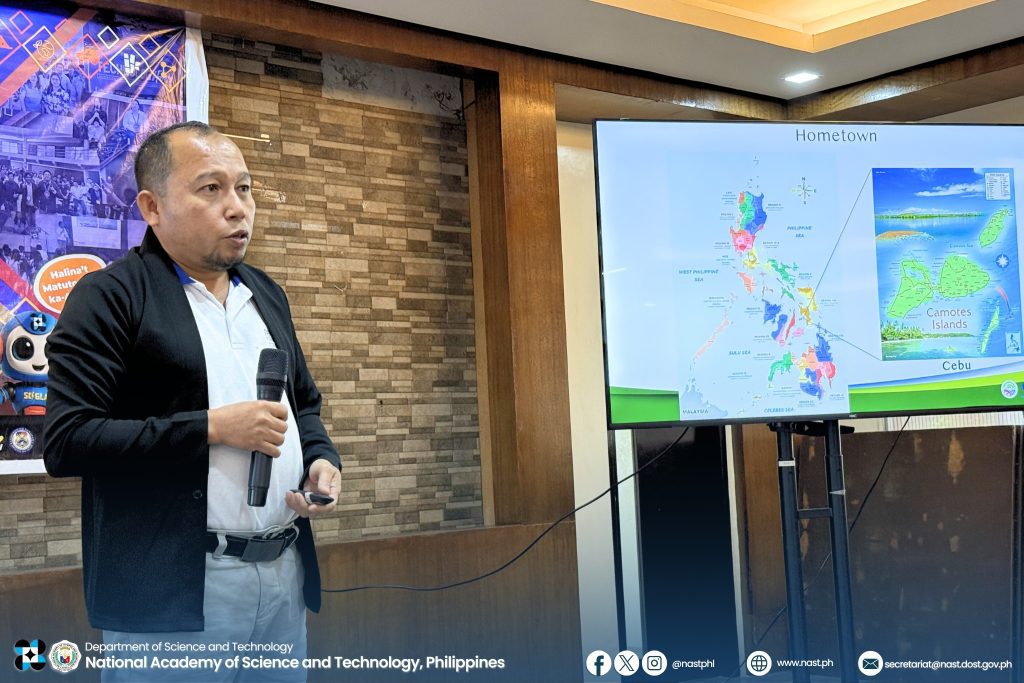
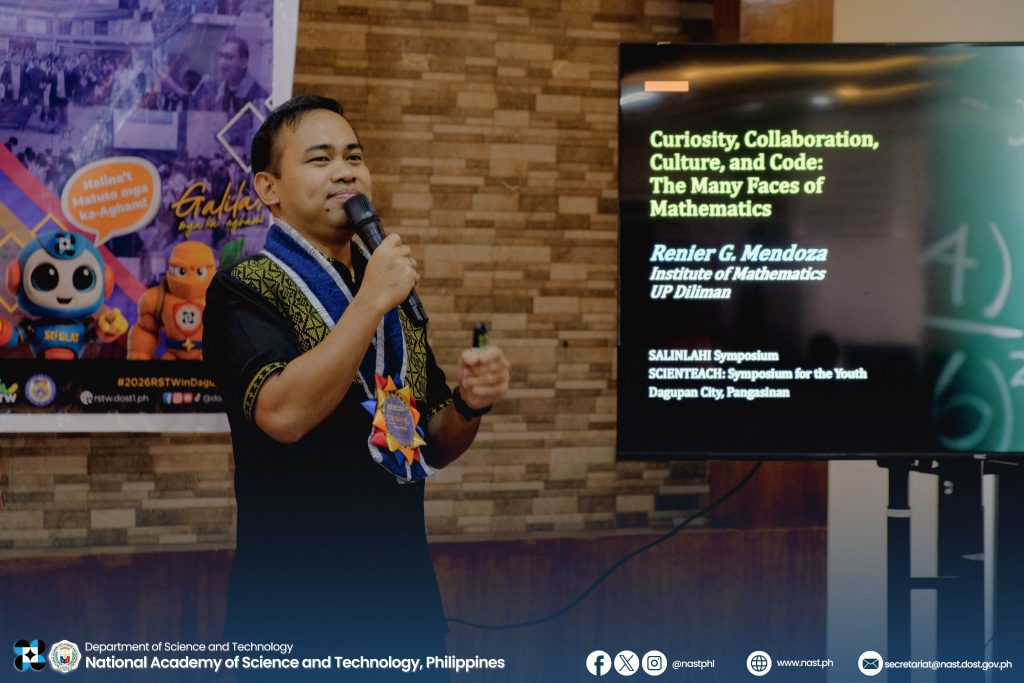
The last speaker was Dr. Renier G. Mendoza, 2024 Outstanding Young Scientist (OYS) Awardee, who discussed how he used his expertise in mathematics and machine learning to develop an online translator from the Latin alphabet to Baybayin, an early Philippine writing system. He highlighted that one’s curiosity could turn them into critical thinkers and scientists who serve as one of the country’s problem solvers. Dr. Mendoza also summarized the benefits of being a DOST scholar to encourage students to pursue studies in mathematics, as this will provide them with many career opportunities.

An open forum was held to give student participants a chance to ask questions to the resource speakers. Their inquiries were wide-ranging, covering technical clarifications within the speakers’ fields of expertise, as well as requests for life advice as scientists.

The resource speakers gladly fielded these questions and maintained a high level of interaction with the participants throughout the program. Afterward, student representatives from the schools shared their impressions and the key takeaways from the symposium.

The activity concluded with the closing remarks from Ms. Luningning E. Samarita-Domingo, Director IV of NAST PHL, represented by Acd. Suralta. They expressed their sincerest gratitude to the DOST Ilocos Region, the DOST Provincial S&T Office of Pangasinan, the Department of Education (DepEd) Region I, the resource speakers, and the students who made the event possible.

The National Academy of Science and Technology, Philippines (NAST PHL) is an attached agency to the Department of Science and Technology (DOST), mandated to recognize outstanding achievements in scientific research and development, advise the President and the cabinet on matters related to S&T, and engage in projects and programs that promote scientific productivity. For more details, visit NAST Philippines’ social media accounts @nastphl.

PHILIPPINE STANDARD TIME

DOST Visayas Provincial Leaders Strengthen Capacities in Futures Thinking for Indicator Development Through Sandiwa

Post Views  

BACOLOD CITY – In a move to localize the country’s long-term scientific vision, leaders from the Department of Science and Technology (DOST) across Visayas trained on foresight  and futures thinking concepts and tools, which will be incorporated in their traditional planning manuals.

The National Academy of Science and Technology, Philippines (NAST PHL), in partnership with the DOST Negros Oriental Provincial Science & Technology Office, hosted an event facilitated by the UP National College of Public Administration and Governance (NCPAG) – Governance Futures Laboratory (GFL), a laboratory under the UP NCPAG Governance Reform, Innovation and Transformation Laboratories on February 4-5, 2026, to design a foresight workshop which will provoke new perspectives on the region’s path towards the year 2050. 

Participants moved beyond basic forecasting to utilize advanced strategic foresight tools. The focus shifted from likely outcomes to possible futures, in which they: 1) determined a focal issue, 2) scanned for relevant trends, driving forces, and emerging issues, 3) identified business-as-usual and alternative future scenarios, and 4) developed a preferred future and strategies to achieve that future.

Using specific Science, Technology, and Innovation (ST&I) foresight indicators, participants mapped out milestone periods, tracking the progression of baseline data toward an idealized future by 2050.

As the workshop proper drew to a close, a powerful and thought-provoking question was posed by the UP NCPAG GFL, resonating deeply amidst all the discussions on foresight and futures thinking: “What kind of future are we building and for whom?” The message served as a salient reminder of the critical purpose behind the crucial exercise.

This initiative underscores NAST PHL’s commitment to building a culture of foresight within the DOST system and eventually, to other government agencies and local government units, ensuring that ST&I planning is strategic, responsive, and regionally grounded. — Jose Lorenzo Jimenez/NAST PHL

PAGTANAW 2050 is the first DOST-funded inter-disciplinal and trans-disciplinal project on Philippine-focused ST&I Foresight and Strategic Plan that would impact the aspirations of the Filipino people on or before 2050: A Prosperous, Archipelagic, and Maritime Nation.

For more information about PAGTANAW 2050, you may visit the NAST PHL website at https://nast.dost.gov.ph/index.php/pagtanaw-2050 and social media accounts through Facebook, Instagram, X, and LinkedIn: @pagtanaw2050
PHILIPPINE STANDARD TIME

Mapping the Philippines’ Future: Bridging Local Realities and a National Vision

Post Views  

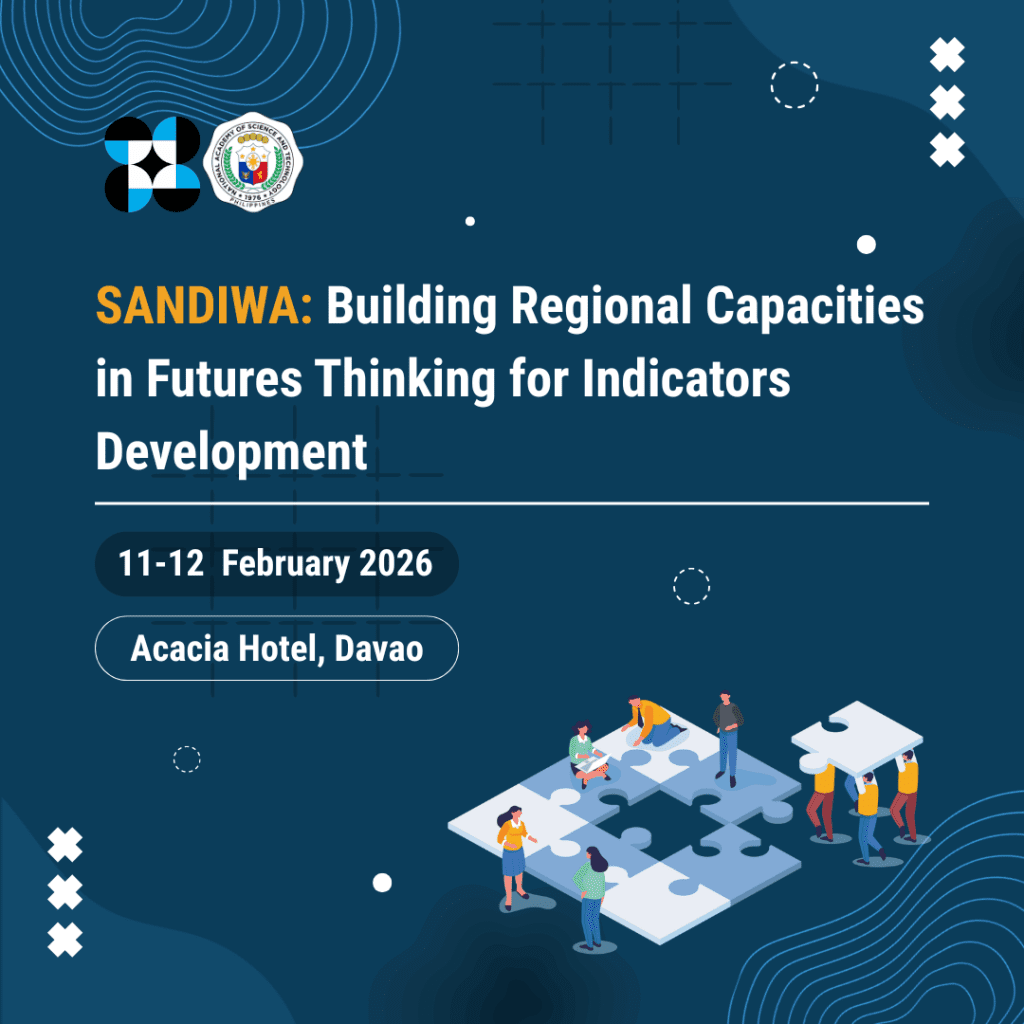
DAVAO CITY – A nation cannot navigate the future if its map does not match the terrain. Recognizing that the path to a resilient Bagong Pilipinas must be charted not only from the capital but from the distinct realities of the regions, the National Academy of Science and Technology, Philippines (NAST PHL), in partnership with DOST Region XI, concluded the final leg of SANDIWA: Building Regional Capacities in Futures Thinking for Indicators Development on 11–12 February 2026, at Acacia Hotel Davao, as part of the Development of the PAGTANAW 2050, the Philippine ST&I Foresight Indicators Project.

Facilitated by the UP National College of Public Administration and Governance – Governance Futures Lab (GFL), the workshop gathered provincial and regional officers from Zamboanga Peninsula, Northern Mindanao, Davao Region, SOCCSKSARGEN & BARMM, and CARAGA. Their mission was clear and critical: to translate the broad strokes of the national PAGTANAW 2050 framework into granular, actionable, and region-specific indicators using strategic foresight tools such as Scanning, the Futures Triangle, and Backcasting. Through this process, the workshop sought to transform how local governance approaches the future by moving beyond traditional planning approaches that often react to the “pushes of the present,” such as disasters, resource constraints, and political turnover. Instead, participants were guided to identify the “pulls of the future,” defined as their preferred development scenarios, and to backcast the concrete milestones necessary to achieve them. 

SANDIWA underscored that a “one-size-fits-all” approach to national development is insufficient for an archipelago defined by diverse geographic and socio-economic realities. Standardized national indicators, while useful for macro-level benchmarking, often fail to capture the nuanced path dependencies and specific industrial structures of local economies. A national metric on food security may track total rice production, yet it misses the specific bottlenecks identified by SOCCSKSARGEN & BARMM, where the challenge lies not in production but in the logistical paradox of regional surplus amid national scarcity. Similarly, a national water security index might measure potable water access, but fail to anticipate localized threats such as mining runoff and saltwater intrusion in CARAGA, or the rapid urbanization pressures confronting Northern Mindanao.

The SANDIWA workshop has proven that the future of the Philippines is not a single destiny, but a collection of regional aspirations woven together by science, technology, and innovation. By localizing indicators, the country moves from generic surveillance to targeted strategic intelligence. Regions are empowered to measure what truly matters to their unique development trajectories, ensuring that the road to 2050 is paved with data that reflects ground-level realities, transforming PAGTANAW 2050 from a static document into a dynamic dashboard, a living tool that guides the nation from the inertia of “business as usual” toward the rhythm of its preferred futures. – Jeremy D. Desales/NAST PHL

PAGTANAW 2050 is the first DOST-funded inter-disciplinal and trans-disciplinal project on Philippine-focused ST&I Foresight and Strategic Plan that would impact the aspirations of the Filipino people on or before 2050: A Prosperous, Archipelagic, and Maritime Nation.

For more information about PAGTANAW 2050, you may visit the NAST PHL website at https://nast.dost.gov.ph/index.php/pagtanaw-2050 and social media accounts through Facebook, Instagram, X, and LinkedIn: @pagtanaw2050
PHILIPPINE STANDARD TIME

Third NAST PHL-PHILAAST RTD Calls for Unified Action to Unlock PAGTANAW 2050 Enablers

Post Views  

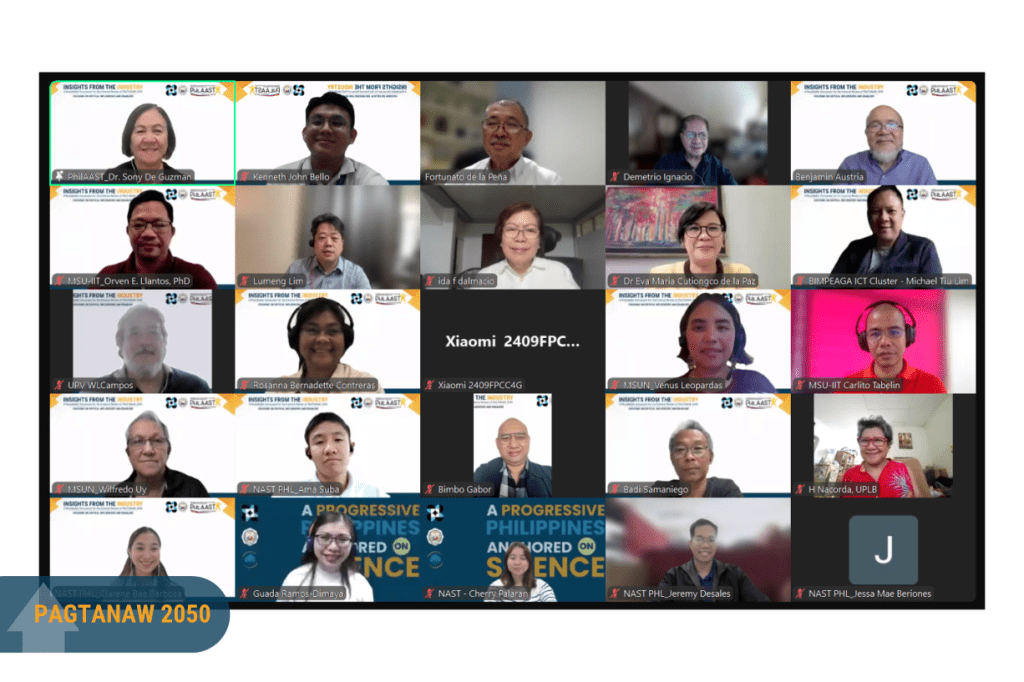
The National Academy of Science and Technology, Philippines (NAST PHL), in collaboration with the Philippine Association for the Advancement of Science and Technology (PhilAAST), successfully hosted its third Roundtable Discussion via Zoom on 17 November 2025, gathering industry experts to provide critical insights for updating PAGTANAW 2050 and identifying key influencers and enablers.

The third session in a five-part RTD series focused on an in-depth discussion of the five (5) Key Operational Areas identified as the Critical Influencers and Enablers in PAGTANAW 2050—namely Blue Economy, Governance, Business and Trade, Information and Communications Technology, and Science Education and Talent Retention.

Resource speakers emphasized the need for enabling mechanisms that build digital literacy and competencies to improve livelihood and quality-of-life. Experts on the blue economy highlighted that digital literacy and access should be systematically embedded and built in marine-dependent localities and networks, alongside harmonized government initiatives that avoid program overlaps. Similarly, business and trade experts echoed the concern about literacy, as digitalization is no longer optional to keep pace with the rapid evolution of technology.

Beside the business sector, Philippine governance was mentioned to be a critical beneficiary of strengthening and expanding our digital infrastructure. Through nationwide digital transformation, the country can be steered toward a science-based, participatory, and resilient future.

Across sectors, there was a clear consensus that Science Education and Talent Retention, and ICT are decisive key enablers in operationalizing PAGTANAW 2050 goals. This entails leveraging human capital, scientific talent, and digital technology to achieve envisioned pathways across other priority areas. Ultimately, these initiatives can only be enacted through participatory engagements, collaborative efforts, clear governance direction, and harmonized mandates.

Following the presentations, industry experts provided their reactions, insights, and recommendations, drawing from their extensive experience in their respective fields. Key takeaways include the need for stronger science-industry partnerships, sustained human capital investment and unified national action, supported by adequate funding to harness science, technology, and innovation.

The discussion concluded with a message of appreciation from Ms. Luningning E. Samarita-Domingo, Director IV of NAST PHL, who thanked PhilAAST, the resource speakers, reactors, and participants for generously sharing their time, expertise, and valuable industry perspectives in support of the PAGTANAW 2050 updating process. — Kenneth John Bello/NAST PHL

PAGTANAW 2050 is the first DOST-funded inter-disciplinal and trans-disciplinal project on Philippine-focused ST&I Foresight and Strategic Plan that would impact the aspirations of the Filipino people on or before 2050: A Prosperous, Archipelagic, and Maritime Nation.

For more information about PAGTANAW 2050, you may visit the NAST PHL website at https://nast.dost.gov.ph/index.php/pagtanaw-2050 and social media accounts through Facebook, Instagram, X, and LinkedIn: @pagtanaw2050
PHILIPPINE STANDARD TIME

NAST PHL to Hold In-House Workshop on Policy Formulation for PAGTANAW 2050

Post Views  

MUNTINLUPA CITY — The National Academy of Science and Technology, Philippines (NAST PHL) will hold the In-House Workshop on Policy Research, Analysis, and Formulation for PAGTANAW 2050 for the benefit of key personnel within the Department of Science and Technology (DOST) and its attached agencies on February 20, 2026, in Alabang, Muntinlupa City.

This initiative is part of the broader DOST ST&I Foresight Development Program, which aims to integrate and strengthen foresight thinking across the Department. The workshop is designed as a crucial step to capacitate DOST staff to effectively integrate the PAGTANAW 2050 foresight and strategic plan into their strategic planning processes.

The activity aims to train key personnel in applying practical foresight tools and frameworks in planning, programming, and decision-making. Recognizing the need to anticipate long-term challenges and opportunities in science, technology, and innovation (ST&I), the workshop seeks to build awareness and understanding of futures thinking and demonstrate its application in policy development and program design.

During the whole-day workshop, participants will engage in lectures and discussions on foresight planning, strategic foresight tools, and the policy application of PAGTANAW 2050. A key session will re-echo insights and lessons learned from the international benchmarking activity in Australia, providing a global perspective on foresight practices.

By the end of the training, participants are expected to apply the concepts and tools learned to develop foresight-informed plans and policies, with PAGTANAW 2050 as a guiding document. This will enhance their ability to formulate strategies aligned with long-term national goals, contributing to a progressive, resilient, and future-ready Philippines.

The workshop will be facilitated by experts, including Dr. Jaine C. Reyes of the University of the Philippines Los Banos – College of Public Affairs and Development (UPLB-CPAf), alongside PAGTANAW 2050 Project 2 Leader Academician Rhodora V. Azanza and Project 1 Leader Academician Glenn B. Gregorio. — Anna Tasnim Basman/NAST PHL

PAGTANAW 2050 is the first DOST-funded inter-disciplinal and trans-disciplinal project on Philippine-focused ST&I Foresight and Strategic Plan that would impact the aspirations of the Filipino people on or before 2050: A Prosperous, Archipelagic, and Maritime Nation.

For more information about PAGTANAW 2050, you may visit the NAST PHL website at https://nast.dost.gov.ph/index.php/pagtanaw-2050 and social media accounts through Facebook, Instagram, X, and LinkedIn: @pagtanaw2050

PHILIPPINE STANDARD TIME

Brewing a Greener Future: #Pilipinast Kapehan Underscores Engineering Sustainability for the Philippines

Post Views  

BICUTAN, TAGUIG CITY – The National Academy of Science and Technology, Philippines (NAST PHL), held the first episode of this year’s #PilipiNAST Kapehan, with the theme “Sparking the Future: Innovations in Sustainable Energy,” via Zoom and Facebook Live on January 30, 2026.

#PilipiNAST Kapehan is a dialogue series that brings NAST PHL scientists together with members of the press, media, and science communicators. This event is held monthly to discuss emerging issues in science, technology, and innovation related to a specific national or international event celebrated within the month. At its core, #PilipiNAST Kapehan serves as a dynamic platform to introduce the Academy’s initiatives and showcase its awardees and members, highlighting the remarkable contributions of Filipino scientists whose work continues to shape national development.

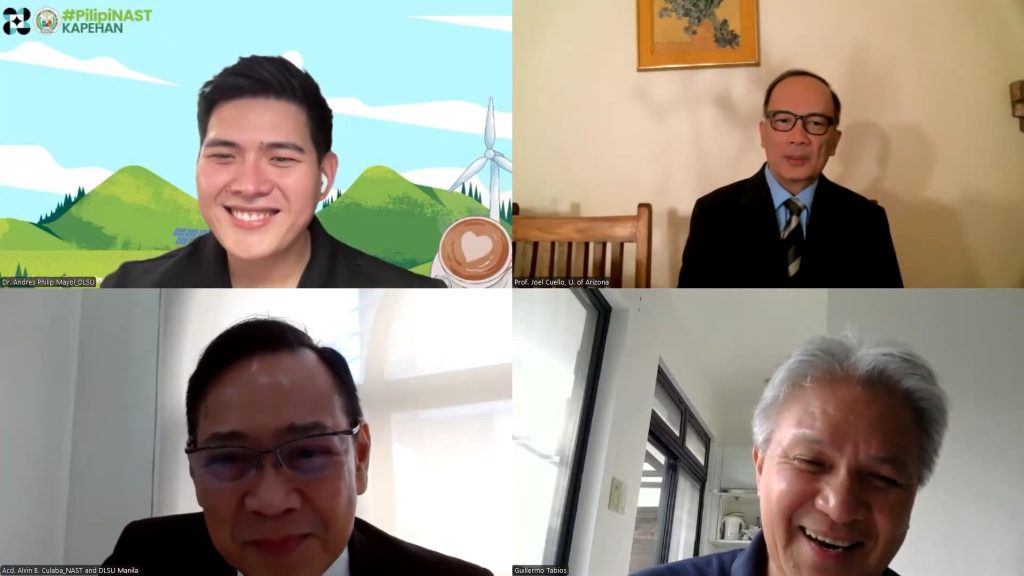
(First Row) Dr. Andres Philip Mayol, Corresponding Member Joel L. Cuello, (Second Row) Academician Alvin B. Culaba,and Academician Guillermo Q. Tabios III during the Q&A session of the January 2026 #PilipiNAST Kapehan

In celebration of the International Day of Clean Energy last January, three (3) esteemed NAST PHL scientists, known experts in various fields of engineering, shared their knowledge and expertise on sustainable energy and water resources. These include Academician Alvin B. Culaba, PhD Mechanical Engineering, Academician Guillermo Q. Tabios III, PhD Civil Engineering, and Corresponding Member Joel L. Cuello, PhD Agricultural and Biological Engineering. Dr. Andres Philip Mayol, PhD Mechanical Engineering, and one of the 2025 Outstanding Young Scientists, served as the moderator for the event.

During this episode, the panelists highlighted the importance of making sustainable and renewable energy work for the country, especially amid increasing resource consumption driven by globalization, innovation, population growth, and the growing use of Artificial Intelligence (AI).

Acd. Culaba stated that, given the world’s limited resources, people should always remember to apply the principle of conservation of energy. He stressed that people should conserve resources and make them more efficient and optimal by converting them into useful energy or applications. Acd. Culaba also emphasized that the country should prioritize resource assessments by gathering data on the sources available in a given area, how much they are, and whether the right people are in place to know what to do to make renewable energy work for the Philippines.

In terms of sustainable development for water resources, Acd. Tabios explained that experts and aspiring engineers should sequence or stage their developments over a planning horizon of five to six (5 to 6) generations (about 250 years) to enhance resource efficiency. He also emphasized that the rate at which we use our resources should be lower than the rate at which they are replenished to make the earth sustainable and support life, including flora and fauna, and help human settlements thrive for a very long time.

On topics related to AI, CM Cuello stated that the Philippines currently has one (1) hyperscale, AI-ready data center that sources a portion of its power from renewable energy and water resources, and that about four or five (4 or 5) more are under construction. However, he mentioned that, despite the technological advancements they provide for the country, they also raise concerns about power and water consumption. Provided this, CM Cuello elucidated that: “There needs to be a comprehensive, holistic, and integrative plan for the use of power, water, and land for sustainable Philippine development, considering as well food production and industry establishment.”

Acd. Culaba added that while the country wants AI to be fully utilized, the government and the public should be aware of its consequences. Acd. Tabios also suggested that future AI algorithms could potentially use analog neurochips instead of digital computation to reduce electrical energy needs.

The program ended with the panelists underscoring the importance of engaging scientists and government agencies, especially the Department of Science and Technology (DOST), to develop an integrated combination of expertise and to develop a multidisciplinary solution to complex environmental sustainability problems. They pushed the science communicators to continue writing articles and opinion pieces to mold the government and its various departments, as they are the catalysts for raising these issues.

The National Academy of Science and Technology, Philippines (NAST PHL) is an attached agency to the Department of Science and Technology (DOST), mandated to recognize outstanding achievements in scientific research and development, advise the President and the cabinet on matters related to S&T, and engage in projects and programs that promote scientific productivity. For more details, visit NAST Philippines’ social media accounts @nastphl.

PHILIPPINE STANDARD TIME

PAGTANAW 2050 to Cap Three-Part Regional Futures Training with Mindanao Leg

Post Views  

DAVAO CITY — PAGTANAW 2050 will conclude its three-part regional Training of Trainers with the Mindanao leg of SANDIWA: Building Regional Capacities in Futures Thinking for Indicators Development, scheduled on 11-12 February 2026 in Davao City.

Following the successful conduct of the SANDIWA workshops in the Luzon and Visayas regions, the final leg is being undertaken in collaboration with the Department of Science and Technology (DOST) Region XI, marking the culmination of a nationwide effort to strengthen regional capacities for futures-oriented planning and indicators development.

The activity forms part of PAGTANAW 2050’s broader initiative to institutionalize long-term, forward-looking approaches to development planning. It aims to localize the framework’s core assumptions by grounding them in regional contexts and translating national aspirations into actionable regional strategies.

During the two-day workshop, participants from the DOST Mindanao Region will engage in guided discussions and hands-on foresight exercises focused on mapping institutional clusters and operations, localizing key indicators, and conducting scenario-building and backcasting exercises across the 12 Key Operational Areas of PAGTANAW 2050.

By the end of the training, participants are expected to strengthen their institutional foresight capabilities and develop forward-compatible strategies that contribute to inclusive, resilient, and sustainable national development.

The SANDIWA workshop series is facilitated by the UP National College of Public Administration and Governance (UP NCPAG) – Governance Futures Lab (GFL). — Cherry Palaran/NAST PHL
PAGTANAW 2050 is the first DOST-funded inter-disciplinal and trans-disciplinal project on Philippine-focused ST&I Foresight and Strategic Plan that would impact the aspirations of the Filipino people on or before 2050: A Prosperous, Archipelagic, and Maritime Nation.

For more information about PAGTANAW 2050, you may visit the NAST PHL website at https://nast.dost.gov.ph/index.php/pagtanaw-2050 and social media accounts through Facebook, Instagram, X, and LinkedIn: @pagtanaw2050
PHILIPPINE STANDARD TIME

Strengthening Regional Foresight: Localizing the PAGTANAW 2050 Vision through SANDIWA

Post Views  

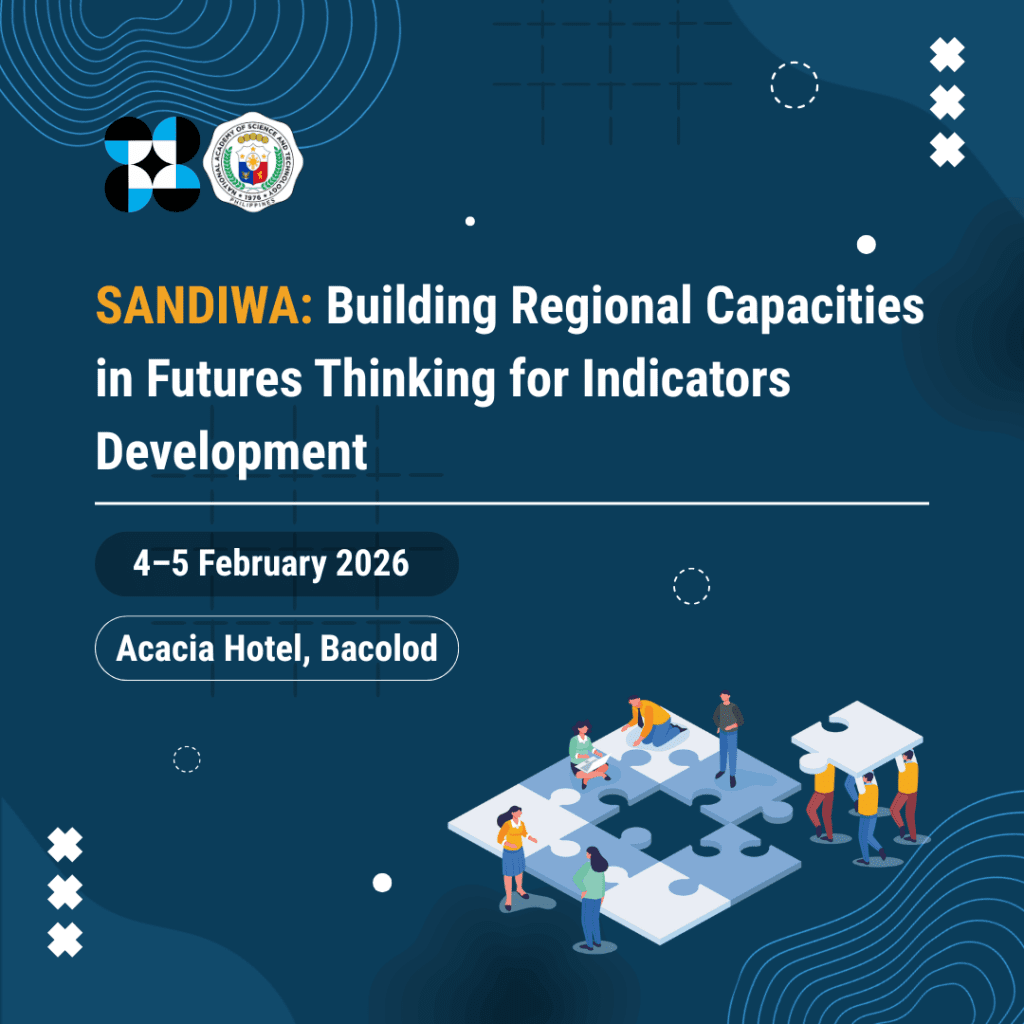
Bicutan, Taguig City – As the Philippines confronts an increasingly volatile and rapidly changing global landscape, the National Academy of Science and Technology, Philippines (NAST PHL) through the PAGTANAW 2050 Program, in partnership with the Department of Science and Technology – Negros Island Region, will be holding the second out of three regional workshops entitled SANDIWA: Building Regional Capacities in Futures Thinking for Indicators Development on 04-05 February 2026 at Acacia Hotel, Bacolod City.

Implemented by University of the Philippines National College of Public Administration and Governance – Governance Reform, Innovation, and Transformation Research (UP NCPAG – GRIT) Laboratories, the workshop aims to strengthen futures thinking and long-term planning in national and regional governance.

Participants from the Provincial Science and Technology Offices (PTSOs) in the Visayas Region will be trained in foresight tools such as sense – making, horizon scanning, futures triangle, scenario building and backcasting, which will support the localization of national indicators down to provincial, municipal, and barangay levels. The workshop will also feature talks from eminent members of NAST; Academicians Azanza, dela Peña, Padolina, and Gregorio on the PAGTANAW 2050 program and its role in shaping a Prosperous, Archipelagic, Maritime Nation.

The workshop aims to make foresight skills widely accessible through a training-of-trainers approach, enabling participants to cascade these competencies within their respective agencies and contribute to a more resilient and a brighter future for every Filipino. — Roberto Katigbak/NAST PHL

PAGTANAW 2050 is the first DOST-funded inter-disciplinal and trans-disciplinal project on Philippine-focused ST&I Foresight and Strategic Plan that would impact the aspirations of the Filipino people on or before 2050: A Prosperous, Archipelagic, and Maritime Nation.

For more information about PAGTANAW 2050, you may visit the NAST PHL website at https://nast.dost.gov.ph/index.php/pagtanaw-2050 and social media accounts through Facebook, Instagram, X, and LinkedIn: @pagtanaw2050
PHILIPPINE STANDARD TIME

NAST PHL Hosts Networking Forum to Strengthen Science Collaboration

Post Views  

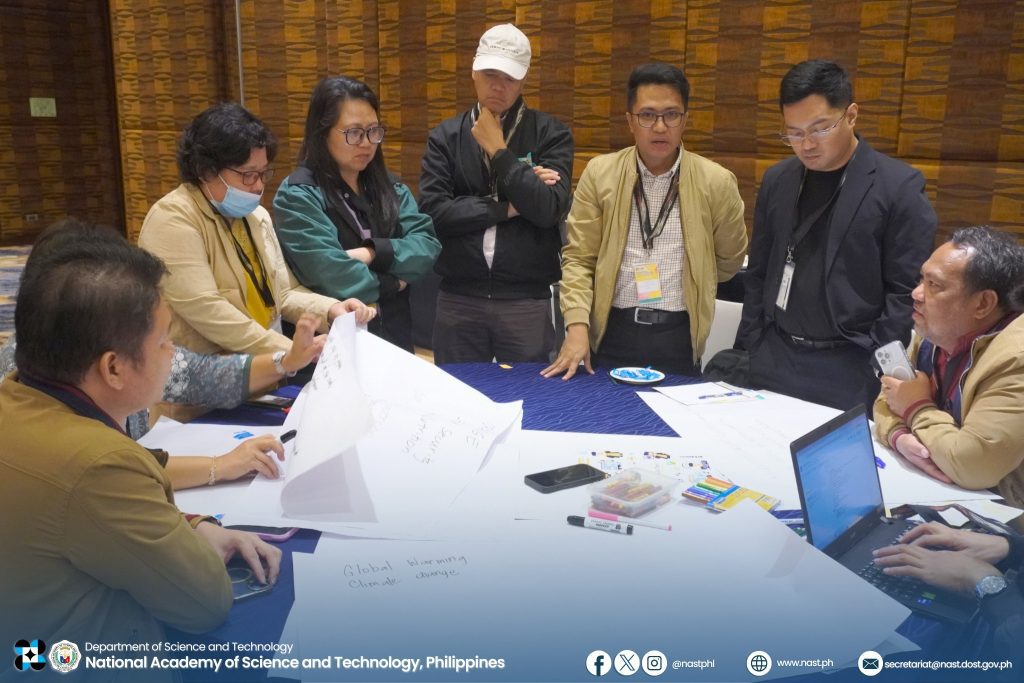
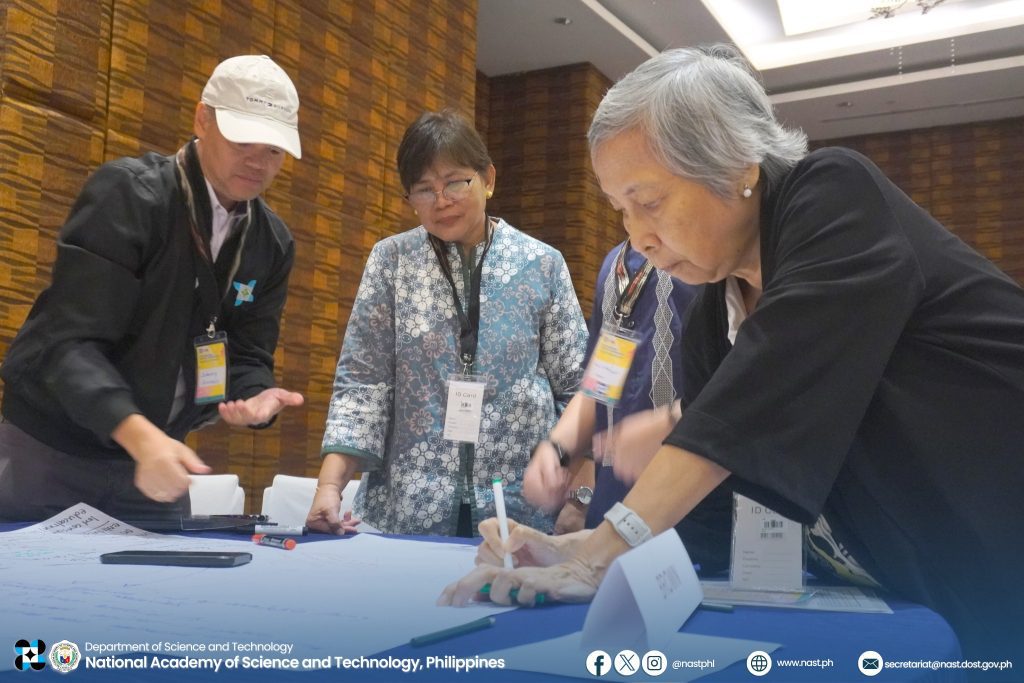
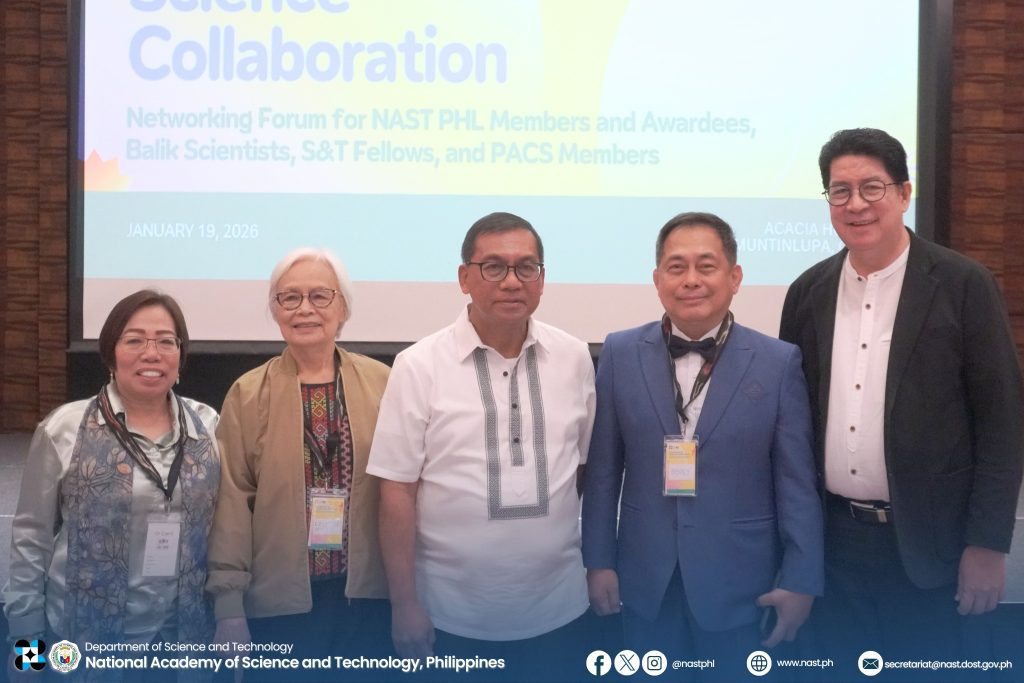
The National Academy of Science and Technology, Philippines (NAST PHL) successfully organized the “Strengthening Science Collaboration: Networking Forum for NAST PHL Members and Awardees, Balik Scientists, S&T Fellows, and PACS Members” on 19 January 2026 at the Acacia Hotel, Alabang, Muntinlupa City.

The forum brought together NAST PHL Members and Awardees, Balik Scientists, Science and Technology (S&T) Fellows, and members of the Philippine Association of Career Scientists (PACS) to explore synergies, share ongoing work, and foster collaborations that can contribute to research, policy development, and capacity-building initiatives.

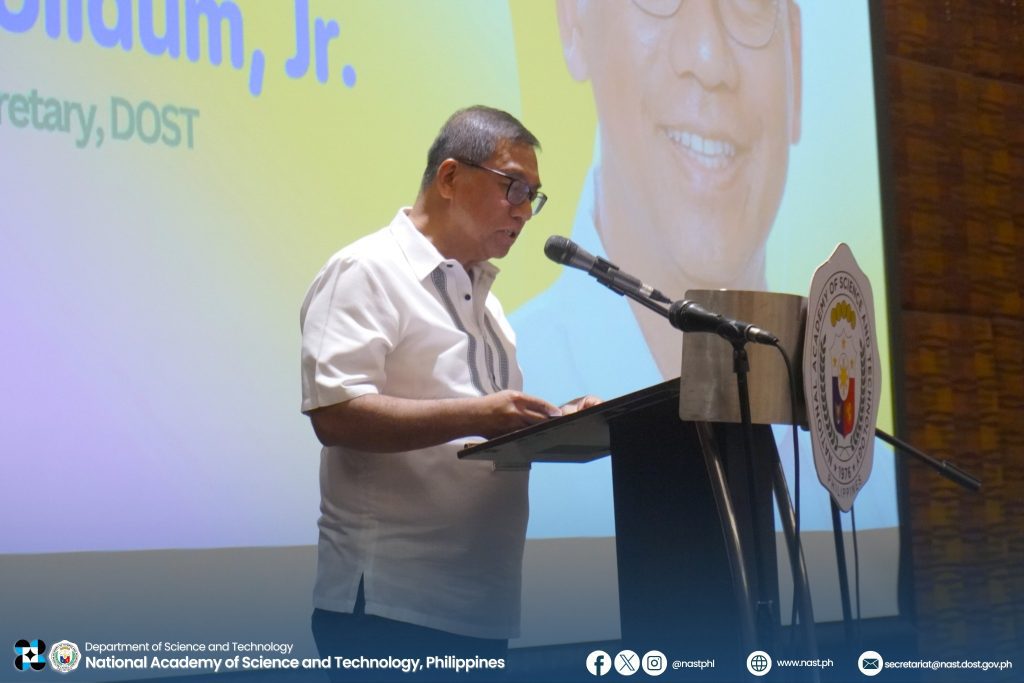
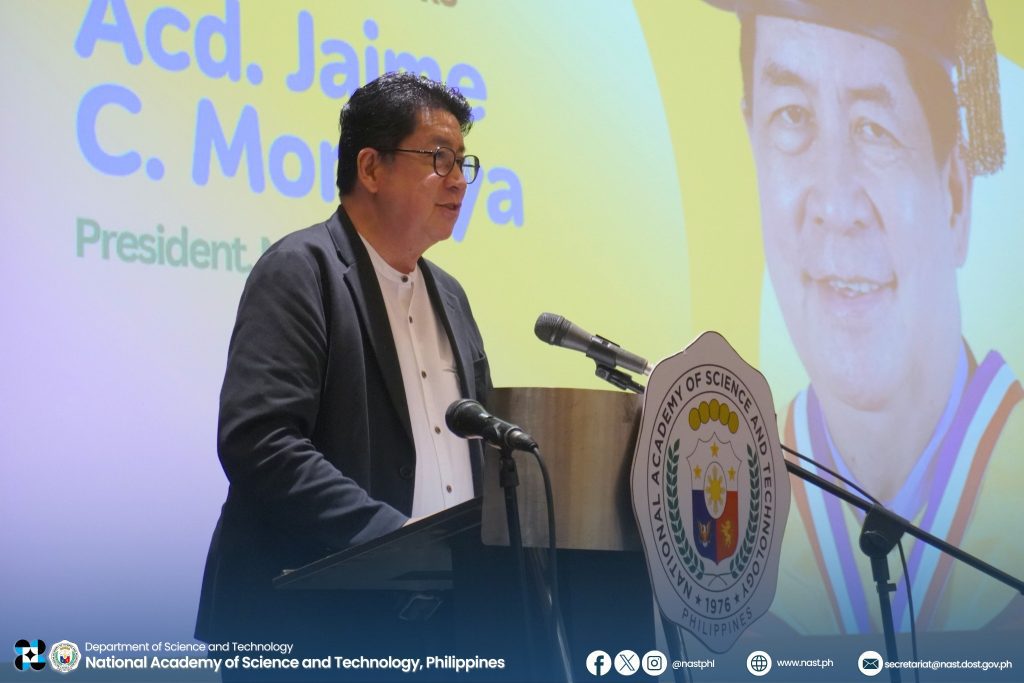
The program began with a welcome by Acd. Jaime C. Montoya, President of NAST PHL, followed by opening remarks from Dr. Leah J. Buendia, DOST Undersecretary for Research and Development, and a keynote message delivered by DOST Secretary Dr. Renato U. Solidum, Jr.

Participants then introduced themselves and engaged in interactive sessions, including The Future Philippine ST&I World Cafe, which encouraged discussions on how the vision of PAGTANAW 2050 can be achieved based on different operational areas. The forum concluded with closing remarks by Ms. Luningning E. Samarita-Domingo, Director IV of NAST PHL.

The event highlighted NAST PHL and DOST’s commitment to strengthening connections within the Philippine scientific community and promoting collaborative approaches to advancing science and technology in the country John Nikko V. Espiritu/NAST PHL).

The National Academy of Science and Technology, Philippines (NAST PHL) is an attached agency to the Department of Science and Technology (DOST) mandated by law (Executive Order 818 s.1982) to serve as an adviser to the President of the Republic of the Philippines and the cabinet on policies concerning science and technology in the country. For more updates, follow NAST Philippines’ (@nastphl) social media accounts.